• ROMRADIATOARE S.A. - Over 100 years of industrial experience

MAXIMUM THERMAL EFFICIENCY WITH ROMRADIATOARE THERMAL MODULES

Discover our innovative solutions for heating and cooling, designed for performance and durability.

WHAT ARE THERMAL MODULES

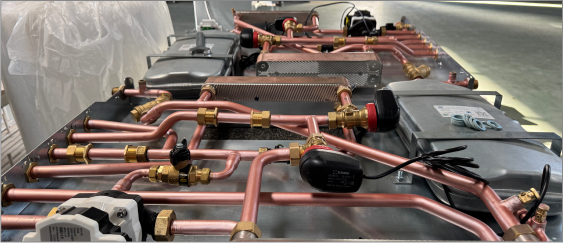
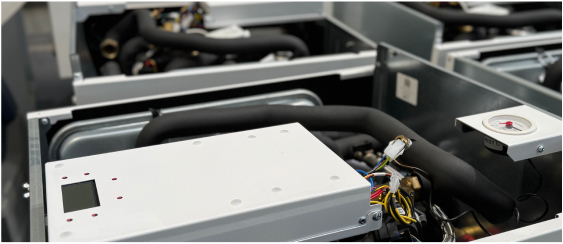
Thermal modules, or Heat Interface Units (HIUs), are essential equipment in centralized heating and domestic hot water systems. They facilitate the transfer of heat between a centralized heating system and the heat distribution network within a building or complex.

Here is a brief overview of the main features and functions of HIUs:

MAIN FEATURES

Efficient operation

HIUs are designed to maximize energy efficiency by utilizing heat generated by thermal power plants or renewable energy sources.

Compactness

These units are often compact, allowing them to be installed in confined spaces, such as basements or technical rooms.

Temperature control

HIUs allow precise control of hot water and heating agent temperature, ensuring user comfort.

Circuit separation

They ensure separation between the centralized heating circuit and the distribution circuit, protecting the system and facilitating maintenance.

MAIN FUNCTIONS

Heat transfer

HIUs transfer heat from the heating agent (usually water) to the building’s heating system, whether it’s radiators, underfloor heating, or domestic hot water.

Flow regulation

These units regulate water flow according to heating requirements, ensuring uniform heat distribution.

Monitoring and control

Many HIUs are equipped with sensors and control systems that allow real-time performance monitoring and adjustment of operating parameters.

Loss reduction

By optimizing heat transfer and precise temperature control, HIUs contribute to reducing energy losses in heating systems.

ADVANTAGES

Energy efficiency: Contributes to reducing energy consumption and operating costs.

Flexibility: Can be integrated into various types of heating systems, including those using renewable sources.

Increased comfort: Ensures better temperature control and user comfort.

ENVIRONMENTAL IMPACT

Energy efficiency

HIUs contribute to increasing the energy efficiency of centralized heating systems, reducing energy consumption and, implicitly, greenhouse gas emissions.

Use of Renewable Sources

These units can be integrated with renewable energy sources (such as solar panels or heat pumps), promoting the use of clean energy and reducing dependence on fossil fuels.

Reduction of Heat Losses

By optimizing heat transfer and temperature control, HIUs minimize heat losses in distribution networks, contributing to more responsible resource consumption.

Improved Air Quality

By reducing emissions from thermal power plants, HIUs can contribute to improving air quality, having a positive impact on public health.

Efficiency of an HIU system versus a classic system

Efficiency of an HIU System
1. High Energy Efficiency:
HIUs maximize heat transfer, reducing energy losses in the network. They allow optimal use of energy generated by thermal power plants.

2. Individualized Control:
Each HIU unit can be adjusted according to specific user needs, leading to increased comfort and more efficient energy use.

3. Integration of Renewable Sources:
HIUs can be integrated with renewable energy sources, such as solar panels or heat pumps, contributing to reducing dependence on fossil fuels.

4. Reduction of Heat Losses:
Due to their design, HIUs minimize heat losses during transport, which is often a problem in classic systems.

Efficiency of a Classic System
1. Centralized System:
In classic systems, heat is generated and distributed from a single source, which can be efficient under certain conditions, but can lead to significant network losses, especially over long distances.

2. Installation Costs:
Typically, classic systems may have lower initial costs, but long-term efficiency can be affected by heat losses and lack of individualized control.

3. Limited Regulation:
In classic systems, users do not have direct control over temperature and energy consumption, which can lead to lower comfort and excessive energy consumption.

4. Higher Emissions:
If the classic system uses fossil fuels, greenhouse gas emissions can be significantly higher compared to systems that integrate HIUs and renewable sources.


Comparison
Energy Efficiency
HIU systems are generally more energy-efficient due to reduced heat losses and individualized control.

Comfort
HIUs offer better comfort through the ability to adjust the temperature according to user preferences.

Flexibility
HIU systems allow easier integration of renewable sources, while classic systems often depend on centralized energy sources.

Long-Term Costs
Although initial costs for HIUs may be higher, savings achieved through energy efficiency and emission reduction can offset these costs in the long run.

Advantages of HIUs
for Installers

1. Quick and Simple Installation:
Compact and modular design, facilitating installation in confined spaces.
Standardized connections that reduce installation time.

2. Precise Temperature Control:
Integrated sensors and thermostats allow automatic temperature regulation, ensuring maximum user comfort.

3. Reduction of Heat Losses:
HIUs minimize heat losses in the network, leading to significant long-term energy savings.

4. Easy Maintenance:
Accessibility for maintenance and diagnostics, reducing associated time and costs.

5. Design Flexibility:
Possibility to integrate renewable sources (e.g., solar panels), adapting to specific customer requirements.

Advantages of HIUs
for Real Estate Developers

1. Energy Efficiency:
HIU systems contribute to reducing operating costs and improving the energy efficiency of buildings, thus attracting tenants or buyers interested in sustainability.

2. Comfort and Control:
Offers users better temperature control, which can increase their satisfaction and comfort.

3. Reduction of Carbon Emissions:
By integrating renewable energy sources and optimizing consumption, HIUs help reduce the carbon footprint of buildings.

4. Added Value:
Buildings equipped with HIUs are perceived as more modern and efficient, thus increasing the market value of the property.

5. Sustainable Solutions:
Contributes to sustainable development goals, being a favored choice in ecological projects.

CONCLUSIONS

  • Thermal modules (HIUs) are a vital component in modern heating systems, offering efficiency, comfort, and flexibility in managing energy resources.
  • Systems with Heat Interface Units (HIUs) offer superior efficiency and better control over energy consumption compared to classic centralized heating systems. This makes them a preferred choice in the current context of concerns regarding sustainability and energy efficiency.
  • Heat Interface Units (HIUs) represent an innovative and efficient solution for centralized heating systems. Installers benefit from simplified installation and an easy-to-maintain system, while real estate developers can offer more energy-efficient buildings that meet the sustainability requirements of the current market.

CONTACT US

    I agree to the terms and conditions, as well as to the processing of personal data on this website.

    I would like to receive news and special offers from Romradiatoare.